See how BD Performing Arts saved $180K with AI. Read the case study.
Build AI around your business, not the other way around. No new
platform. No massive implementation. Just practical AI solutions
that deliver measurable results in weeks and leave you in control.
Every organization has the same problem. You’ve invested in systems: ERP, CRM, a finance platform, a project tracker, an HR system. They each do their job. And then there’s everything else.
The spreadsheets. The email threads. The PDFs that have to be re-keyed. The reports someone builds every Monday by copying data from four screens. The handwritten notes from a customer that have to become a structured order. The compliance review that requires pulling evidence from twenty different places.
All of that work lives in the seams between your systems, which is where agents do their best work. Agents don’t necessarily replace what you already have. They wrap around it. Your ERP doesn’t change. Your customers don’t see anything different. The agent absorbs the complexity that no platform was ever designed to handle. Your team gets hours of their week back, investing their expertise in ensuring output is accurate, and helping the business grow.
Agentic AI is AI that doesn’t just answer questions; it completes work. Unlike traditional AI tools that generate content or provide suggestions, agentic AI can understand a business objective, make decisions within defined rules, use software and data across systems, and carry tasks through to completion with human oversight.
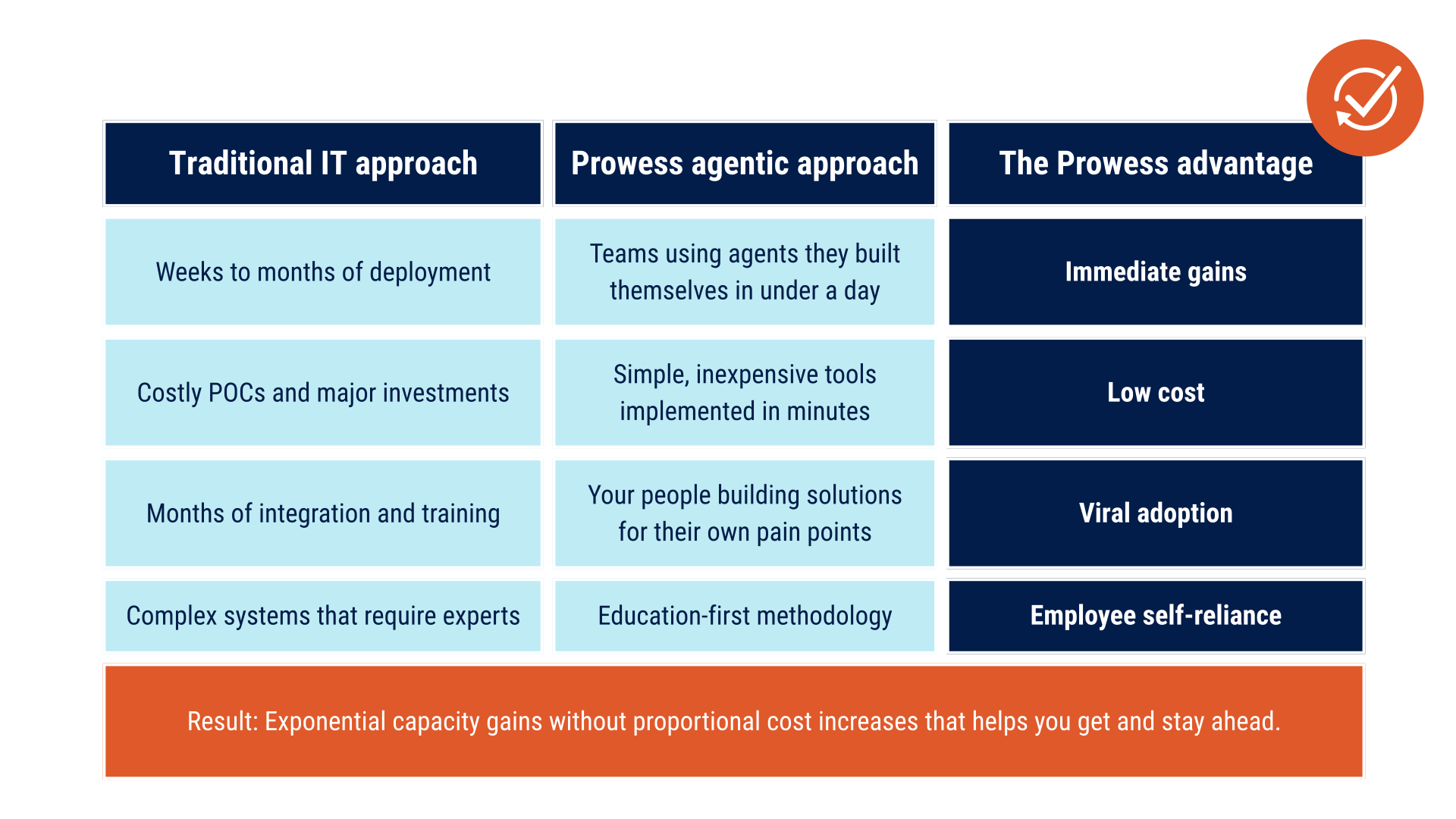
Agentic AI is completely different from the software and computing models and our decades of experience with them. The AI projects that are actually working right now look nothing like the software platform projects of old. Forget long specifications documents and a team working for months to get a prototype built. Agentic AI is smaller, faster, closer to the actual workflow, and it produces measurable results in weeks instead of quarters. That’s the practice we’ve built. It’s the only kind of modern AI work we do.
Your business can start winning in days or even hours. Our approach is based on two complementary principles: the inversion and the seams.
For 50 years, enterprise software has worked one way. A vendor builds a platform. Workers adapt to it. Salesforce decides how you sell. Workday decides how you manage people. SAP decides how you run your supply chain. The tool comes first. The human bends.
This is so normal that most leaders don’t see it as a constraint. It’s just how software works.
Agentic AI flips the model. For the first time, every worker in your organization can build tools shaped precisely around how they actually work and not how a platform requires them to work. A manager who spent four hours every event cycle gathering and consolidating travel emails from a dozen people can now do it in twenty seconds. On her first attempt. No new platform. No IT project. No months-long implementation.
That isn’t AI-enabled software. It isn’t a platform with an AI layer bolted on. It’s a different shape of work entirely. Once your team experiences it, the old way looks strange in a way that’s hard to unsee.
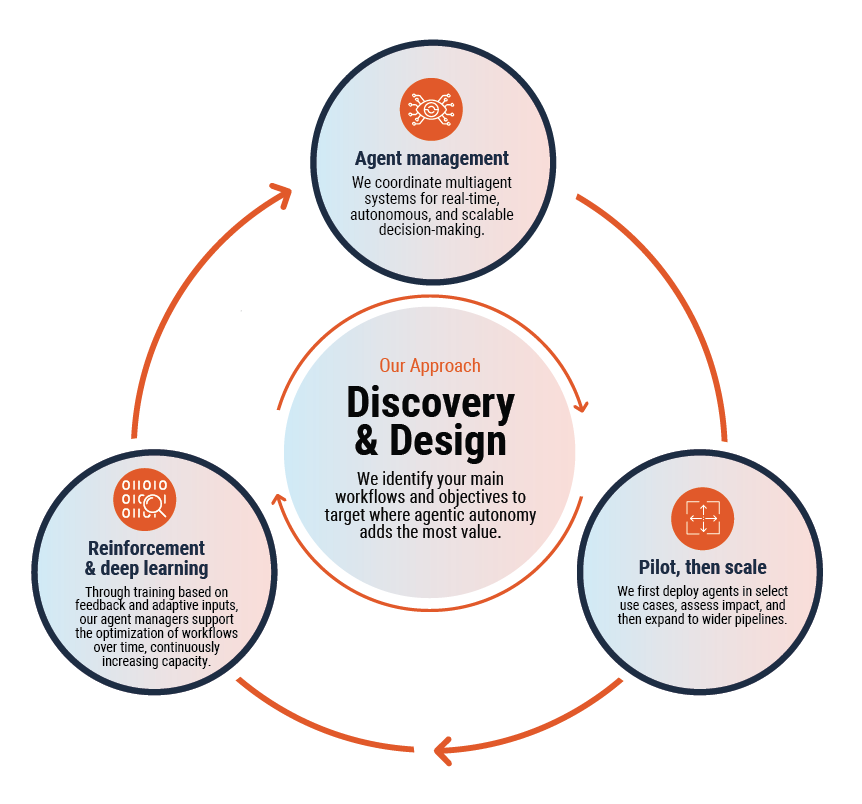
Before we write a prompt, we sit down with your team and get clear on what work matters, where the friction is, and what ‘better’ would actually look like. That work isn’t separate from the AI engagement it is the engagement. The clarity we develop together is what makes the agent useful. Without it, you’d have a clever tool solving the wrong problem. In other words, a failed project.
This is the part of the work that most AI projects skip, and we have found that it’s the part that most leaders didn’t know they were missing. We’ve yet to walk into a client engagement where the first hour didn’t surface a business question that should have been answered years ago. Answering it is half the value of working with us.
Most agentic AI projects fail at the business layer, not the technology layer. You can’t build a useful agent for a workflow nobody has actually mapped. You can’t transfer capability to a team whose roles aren’t clear. You can’t pick the right first agent without understanding what actually creates value in the business.
When we align your knowledge of your business with our knowledge of agentic AI you gain a new insight about the right problem to solve. We call this the Epiphany. It happens quickly and without difficulty. Once achieved we can accomplish astonishing work output with implausible speed addressing a backlog of clearly prioritized tasks that culminate in the new way of working for individuals, teams, and eventually the entire enterprise.
A focused strategic engagement with defined deliverables and a working agent at the end. Not a pilot. Not a strategy deck. A real result, in just 4 weeks.
Ignition is how a relationship with Prowess starts. It’s designed to do three things at once: prove that agentic AI works in your environment, transfer enough capability to your team that they can keep going, and produce a prioritized backlog of the agents most likely to create value next.
What you get at the end of an Ignition engagement:
BDPA’s executive director, Mike Stone, and operations lead, opened the door to something most leadership wouldn’t. They let us start small, with one of their staff members, and one workflow.
After two short training sessions, a staff member with no technical background built an agent that turned a four-hour data consolidation task into twenty seconds. First attempt. He didn’t think it was a big deal.
of previously outsourced accounting work — replaced by agents built by their own staff.
Their customers send orders any way they want — handwritten notes, photos of paper invoices, PDFs, sometimes a single line in an email. Someone on the team had to turn all of that into structured orders.
We wrapped an agent around their existing systems. Nothing changed for their customers. Their ERP didn’t change. Their team’s job changed.
per customer order — at a total technology cost of $20/month.
Most consultancies have an unspoken business model: the more mature a client becomes, the more dependent they get. We built Prowess the opposite way. The more capable your team becomes, the more sophisticated the work we can do together and the less you need us for the basics.
That’s the through-line across every kind of engagement we run. Sometimes a client wants to learn to build agents themselves, and we teach. Sometimes they want us to design and deliver the agents, and we do. Sometimes they want us to run the whole thing as a managed operation, and we run it. Most clients end up needing some mix of all three, and the mix shifts as they grow.
What stays constant is the direction. Every engagement transfers capability. Every capability transfer creates the next, more interesting problem worth solving together. The work gets harder over time, not because you depend on us more, but because you can do more and your vision has expanded to address bigger challenges. Our methodology creates a virtuous cycle: each successful implementation expands both organizational capability and leaders’ vision for what’s possible. That’s where the greatest value of agentic AI emerges, not from a single solution, but from the momentum it creates for continuous improvement and innovation.
– Aaron Suzuki, CEO, Prowess Consulting
Unlike traditional software implementations that take weeks or months and often create new bottlenecks, Prowess enables your teams to build their own throughput solutions immediately.
We teach teams to create agents. Employees learn to build AI agents that eliminate their daily bottlenecks. This is a capacity-building capability that scales across your organization.
As your processes evolve, your agents evolve with them, maintaining high throughput without constant IT support or system upgrades.
Agentic AI doesn't just assist with tasks, it executes complete workflows autonomously, eliminating the handoffs and delays that create bottlenecks.

Agents handle entire processes from start to finish, removing the bottleneck of task-switching and handoffs between systems or people.

Multiple agents work simultaneously on different aspects of complex challenges, increasing throughput exponentially compared to sequential human work.

Agents don't sleep. Workflows that used to wait for business hours now complete continuously, dramatically increasing throughput.

When demand spikes, agents scale instantly. No hiring delays, no training time, no capacity constraints.

Agents identify their own inefficiencies and optimize performance over time, continuously increasing throughput without manual tuning.

When processes change, agents adjust immediately, no bottleneck for system updates or retraining.
The current AI landscape often limits models to single task outputs. Agentic AI transcends that by:
We measure success in capacity multiplication:
With a focus on real business outcomes, we guide your teams through adopting agentic AI responsibly, turning innovation into lasting enterprise value.
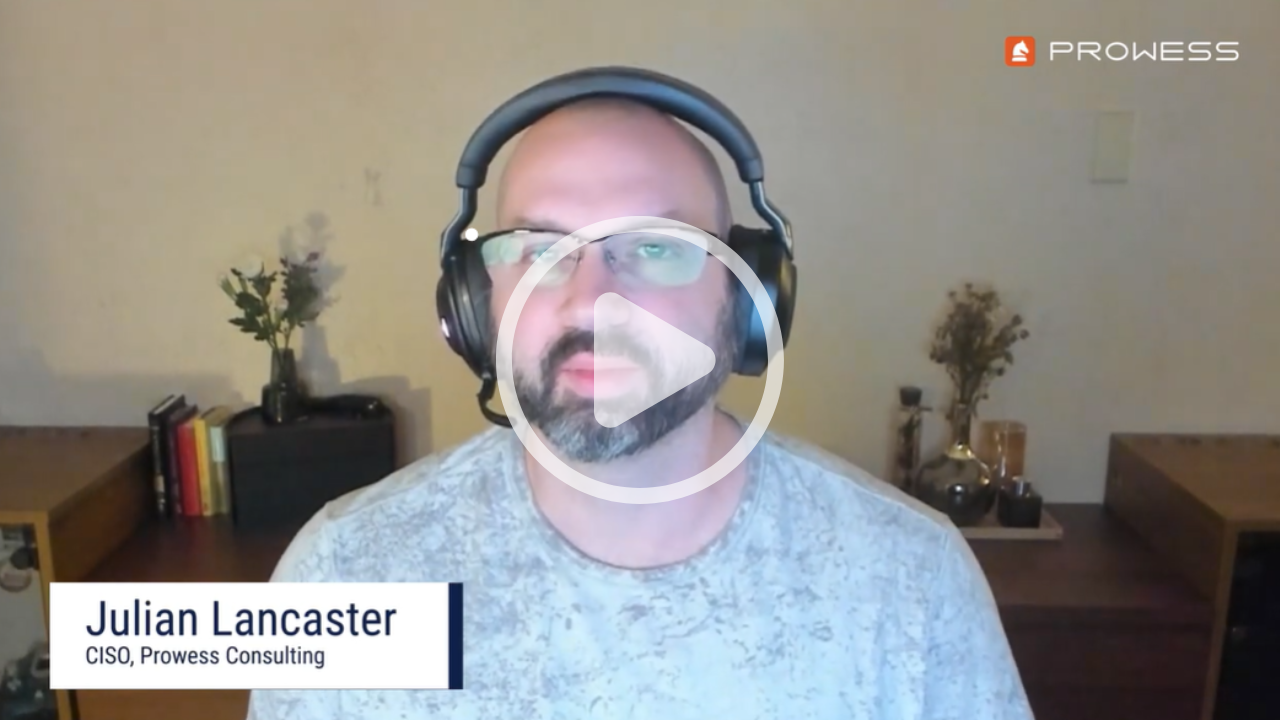
Watch our free Agentic AI video training series, led by Julian Lancaster, CISO at Prowess Consulting. This foundational series breaks down the essentials for business leaders and tech professionals, delivering practical insights and tools to help you scale your capacity with confidence.
Every Ignition conversation we’ve ever had has started with some version of these questions. Here are honest answers.
The answer is no, as long as you design and deploy agents properly. Agents operate within governed, policy-controlled environments. Data access is scoped, auditable, and owned by your IT team. Governance is the first thing we build in an Ignition engagement not the last. No agent runs in your environment before that framework is in place.
Well-built agents reduce compliance risk because they make processes consistent, documented, and repeatable. We design every engagement with your compliance requirements as a core consideration, not an afterthought. In fact, AI agents are incredibly well-suited to supporting compliance workstreams. Compliance teams are often identified as a starting point for organizations’ first agents.
This is a very common complaint, and the reason is almost always the same: the project started with a platform decision instead of a workflow. We start the other way around. We pick the workflow first, build the agent around it, and the technology question becomes a downstream choice instead of a defining one.
Strategy emerges from experience. Ignition produces a prioritized backlog, not a roadmap. The backlog is your strategy, grounded in what actually creates value in your business, ordered by what’s most likely to work next.
While Generative AI focuses on producing standalone outputs in response to prompts, Agentic AI refers to a broader set of emerging capabilities that extend beyond simple generation. These systems are designed to execute multi-step workflows, often using tools or APIs, and can include multi-agent architectures that collaborate on complex tasks. Agentic AI builds on the foundation of GenAI, adding layers of autonomy, orchestration, and adaptability to tackle more sophisticated enterprise use cases.
This is the part that surprises leaders most. Workers don’t resist agentic AI the way they’ve resisted past technology rollouts because they’re not being asked to adapt to a new system. They’re being given a tool that does their work, their way. Adoption follows because the value is immediate and personal. Work is easier and gets done faster.
Yes. We embed transparency, documentation, and human in the loop checkpoints to uphold responsible governance.
Use it where multistep processes, real time decisioning, or continuous learning are critical—such as customer support, cybersecurity, DevOps, BI, and predictive maintenance.
Most of our best engagements start with a 30-minute conversation centered around the problems you want to solve. We’ll dissect a real workflow in a live working session. By the end of it, you’ll know whether agentic AI is worth pursuing in your organization and whether we’re the right partner to do it with.
The most useful question you can come prepared to answer: what’s a four-hour task in your organization that should take four minutes?
We’ve never been in a room where someone couldn’t answer it.
As founder and CEO of Prowess, Aaron Suzuki has led the organization to become a thriving business filling the important space between technology development and marketing teams with technology, applications, content, and analytics.
Aaron was also the founder and CEO of SmartDeploy, a Seattle-based IT management software company. SmartDeploy simplified the secure configuration and management of business computing endpoints for thousands of customers globally.
Earlier in his career, Aaron served as Director of Business Development at Entirenet, a Seattle-based technical services firm. Before moving to Seattle, Aaron was President of Inetz Media Group, a web application development company based in Salt Lake City.
Aaron holds a B.S. from Brigham Young University and a M.S. from the University of Iowa. An avid cyclist and passionate skier, he also serves on the Board of Directors of Blue Devils Performing Arts, a youth performing arts non-profit.