Every enterprise runs on two versions of the same process. There’s the one written down, in the wiki, the SOP, the training deck, the compliance manual. And there’s the one that actually happens: the spreadsheet on somebody’s desktop, the workaround the ops team invented in 2019 and never told anyone about, the sequence of steps that only the person who’s been there fifteen years knows.
The gap between those two versions is where most enterprise AI investments fail.
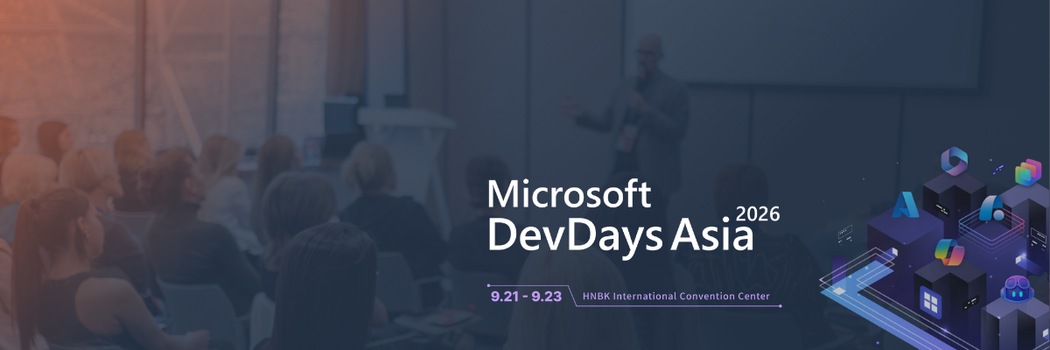
That’s a big claim, but we’re seeing a clear, consistent pattern emerge in the work we’re doing for clients. Next week Julian Lancaster and Ted Fitch are taking the stage at Microsoft DevDays Asia in Taipei with one of our clients to walk through a live example where we closed that gap, and we did it using a locally deployed, or “sovereign,” AI model on a Windows PC. I want to explain, before they do, why I think this is the most under-discussed problem in enterprise AI right now, and why the solutions we’ve been shipping is the approach that works.
Why the gap exists
Documented processes are written to be defensible, to ensure compliance. Actual processes are created to be fast. Over time, those two things drift apart. Nobody updates the wiki because nobody budgets for wiki maintenance, and the person who knows how the process really works is too busy running it to write it down.
You can’t fix this with more documentation. Documentation is what created the drift in the first place. And you can’t solve it simply by adding an internal development effort or launching a top-down process re-engineering initiative. Engineer time is expensive, and even a well-built solution creates an ongoing burden of ownership, maintenance, and administration. Engineers also aren’t always close enough to the underlying business process to know when or how it should change, which means every update can require going back to the process owner for context and approval. By the time the initiative ships, the process may have drifted again, leaving the organization with another system to maintain rather than a durable solution.
What actually closes the gap is a system that meets the work where it lives, on the desktop, in the spreadsheet, in the tribal knowledge, and encodes it into something reliable, auditable, and repeatable.
Language jobs like this are the tasks that language models were born to do, provided you point it at the right problem.
Why cloud-first AI may not be the best
Here’s where a lot of enterprise AI projects hit a wall. The gap between documentation and real life usually lives inside sensitive data: customer records, financial data, regulated workflows. The moment you propose sending that data to a cloud model, you’ve triggered a compliance review that will take six to eighteen months, and the answer at the end of it is often no.
We’ve watched good projects die at that gate. Not because the AI wasn’t capable. Because the architecture was wrong for the constraint.
The industry response has been to argue harder for the cloud. “Trust us, the data is encrypted.” “Trust us, we have SOC 2.” “Trust us, our enterprise tier is different.” That’s a fine argument for a greenfield deployment at a startup. It’s a losing argument at a bank, an insurer, a healthcare system, or a regulated advisory firm.
The teams making real progress right now are the ones who stopped fighting the constraint and started designing for it.
The pattern that works: Sovereign AI
For a growing set of use cases, we’ve been shipping agents that run entirely on the device where the work happens. No cloud. No internet round-trip. No data leaving the environment. Just a purpose-built agent, running locally, doing one job well. The now-popular expression is sovereign AI.
Here’s Julian on why this matters:
“The interesting thing about on-device isn’t just the architecture, it’s how it answers so many policy and security questions. When the data never leaves the device, the compliance conversation goes from ‘let’s discuss this for six months’ to ‘yes, ship it.’ That’s not a technical win. That’s a business-outcome win.”
Not every business process is a good match for on-device AI, but it’s a pattern we’ve seen consistently across businesses. It fits especially well when the workflow is bounded, the data is sensitive, and the value comes from taking a repetitive, error-prone process and making it fast and reliable. The upsides can be broad and impactful, providing a practical stride toward organizational AI adoption without requiring a data center migration, a platform commitment, or an organization to buy the future all at once. And it ships in weeks, not quarters. That matters more than most executives realize. If the first agent takes six months, the second one never happens.
What we're going to show in Taipei
The client story we’re presenting saves 200 hours a year previously spent splitting advisor commissions across spreadsheets. It’s a workflow every attendee at DevDays will recognize: high volume, high pain, high compliance sensitivity, and completely unsexy. Nobody wakes up excited to work on commission calculations.
We rebuilt it as a sovereign AI app running on a 13-inch Windows tablet. No cloud. No internet. Fully compliant. And the commission run went from tens of hours to about four minutes.
I’ll let Jules and Ted tell you the how when they present in Taipei. What I want you to know before then is why we picked this story to tell. It’s not the flashiest AI demo we could show, but it’s authentic, real business relief. It’s the one that best represents the kind of work we think matters right now: closing the gap between how a process is documented and how it actually gets done, inside the cultural and technical constraints the enterprise actually has.
The team is bringing back a five-step blueprint from the session, and we’ll publish it in full the week after. Whether or not you make it to Taipei, you’ll get the framework.
If you're going to DevDays
Go find Jules and Ted. They’re on stage Monday, and they’re in town all three days. We even have a booth. If you want to grab twenty minutes with either of them while they’re there, we’ve opened the calendar. Same page has the case study they’re referencing on stage. Download it now, read it on the plane, and come to the session with questions.
I’ll be back in Seattle wishing I were there. But we’re bringing all of it home: the blueprint, the video, the story. Check out that page.
Aaron Suzuki
Related Posts

Episode 15: How AI Is Revolutionizing Fashion & E‑commerce
Sulay Lavsi shares how Bummer built a bold, disruptive D2C brand in India’s most overlooked category and how AI, gut-driven content, and an obsession with

Episode 14: Building for What’s Next – How Credit Unions Are Shaping Their AI Journey
Tom Kuslikis shares how EFCU Financial is using AI to free up its people, serve the next generation of members, and stay ahead of the

The Task Used to Take 3 Weeks. After One Training Session, It Took 20 Minutes.
What happened when one person on a 25-person team saw agentic AI click for the first time.